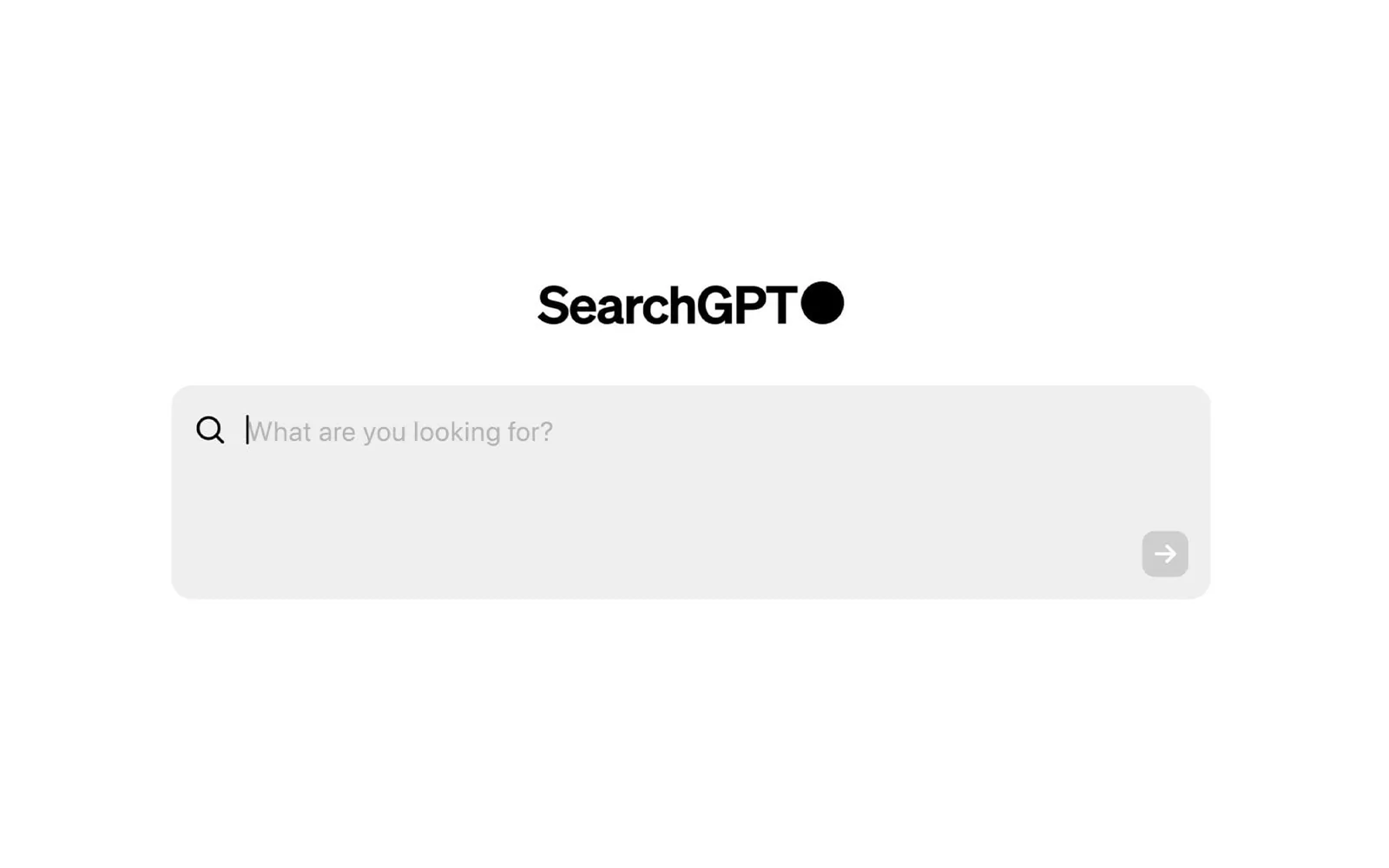
SearchGPT vs Google: The Future of Search
 Itamar Blauer6 min read
Search has changed more in the last few years than in the previous decade.
When I originally wrote this article in October 2024, SearchGPT had just launched as a closed prototype. It was invite-only, unproven, and most people in the industry were asking “will this actually go anywhere?”
We now have our answer.
SearchGPT is no longer a beta product - it’s ChatGPT Search, fully integrated into ChatGPT and available to all users, including those on the free tier. It processes hundreds of millions of queries. It has real-time web access, source citations, and a conversational interface that a growing number of users now prefer over traditional search.
Meanwhile, Google has responded aggressively. AI Overviews are now live globally, Google’s AI Mode is rolling out, and the traditional ten blue links SERP is increasingly rare for informational queries.
The AI search wars are no longer a prediction, rather, they’re the reality we’re operating in right now.
With that context updated, here’s how the two platforms compare today.
ChatGPT Search vs Google: Key Differences
Both platforms want to answer your questions. But how they do it - and what that means for users and SEOs - has diverged significantly.
1. User experience
Google’s traditional SERP still exists, but for many informational queries it’s now dominated by AI Overviews, pushed-down organic results, and ads. The experience has become increasingly cluttered.
ChatGPT Search provides direct, conversational answers with inline citations. It handles multi-turn queries naturally, remembers context within a session, and produces clean, readable output without ads.
For users who know what they want and want a direct answer, ChatGPT Search is faster and less noisy.
Winner: ChatGPT Search.
2. Accuracy and freshness
Google still has the edge on freshness and breadth. Its index is vastly larger and its crawl rate is unmatched. For local search, breaking news, and queries where timeliness matters, Google remains more reliable.
ChatGPT Search has improved dramatically (it now has live web access) but it still occasionally produces confident answers that are subtly wrong or slightly stale. The gap has narrowed, but it hasn’t closed.
Winner: Google (for now).
3. Ads and distractions
Google’s revenue model depends on ads. Sponsored results, Shopping carousels, and AI Overviews all compete for attention above organic results. For many queries, organic listings don’t appear above the fold at all.
ChatGPT Search remains ad-free at the time of writing, though OpenAI has signalled that monetisation is coming. Perplexity has already introduced sponsored results. The ad-free window may not last.
Winner: ChatGPT Search (for now).
4. Adoption
Google is estimated to hold roughly 90% of the search engine market share via Statcounter - a figure that has slipped slightly since 2024, but still represents near-total dominance.

(The chart above is my snapshot from September 2024, when I originally wrote this post - the picture it shows has barely moved since.)
The infrastructure, device integrations, default browser settings, and habitual user behaviour all work in Google’s favour.
ChatGPT has hundreds of millions of weekly active users, and search is one of its most used features. It’s growing fast - but it’s growing from a different user base, not directly cannibalising Google’s core.
Winner: Google.
5. SEO implications
This is the comparison that matters most if you’re reading this as an SEO or marketer.
Google’s AI Overviews mean that ranking position 1 no longer guarantees a click. Zero-click searches are accelerating. The focus has shifted from ranking to being cited - in AI Overviews, in ChatGPT answers, in Perplexity summaries.
ChatGPT Search cites sources and does link out, which creates a new form of referral traffic. But the volumes are still small compared to Google. Tracking it via UTM parameters and referral analytics is increasingly important.
The implication for both platforms is the same: content that directly, authoritatively answers specific questions is what gets surfaced. Thin, generic content is invisible across all AI-powered search tools.
Winner: It depends what you’re optimising for.
Is ChatGPT Search better than Google?
For certain use cases, yes.
If you’re researching a topic and want a comprehensive, synthesised answer without having to open ten tabs, ChatGPT Search is often the better experience. It’s faster, cleaner, and more conversational.
If you’re looking for a local business, tracking down a specific product, or need the most current news, Google is still the more reliable choice.
The honest answer is that neither platform is universally better. They serve overlapping but distinct needs, and most sophisticated users are already switching between them depending on what they’re looking for.
Is ChatGPT Search free?
Yes. ChatGPT Search is available to all ChatGPT users, including the free tier. You do not need a paid subscription to use it.
ChatGPT Plus, Pro, and Team subscribers get priority access and higher usage limits, but the core search functionality is no longer paywalled.
How to optimise for ChatGPT Search (and AI search generally)
The fundamentals haven’t changed, but the emphasis has shifted.
Write to be cited, not just to rank
AI search tools surface content that directly, clearly answers a specific question. If your content buries the answer in padding, it won’t be picked up. Lead with the answer, then expand.
Structured content performs better
Clear headings, concise paragraphs, and logical structure make it easier for AI to extract and attribute your content accurately. FAQs, step-by-step guides, and definition-led sections all work well.
Brand and entity signals matter more
ChatGPT Search and Google’s AI Overviews both favour sources that are well-known and trusted. Being cited in third-party publications, having a strong Wikipedia or Wikidata presence, and maintaining consistent entity signals across the web all contribute.
Don’t ignore traditional SEO
ChatGPT Search still pulls from the live web. If Google can’t find or crawl your content, ChatGPT Search is less likely to either. Your technical SEO foundations (e.g. crawlability, page speed, internal linking) still apply.
Monitor your AI referral traffic
Set up a filter in GA4 for referrals from chatgpt.com and perplexity.ai. It’s still small, but it’s growing - and you want to see which pages are generating it. In May 2026, Google announced a new AI Assistant traffic measurement channel, which should help make life easier.
What does the future of Search look like?
We’re already living in it.
The hybrid model I predicted in 2024 - AI-powered answers alongside traditional results - is the current reality on Google. And it’s moving fast. Google’s AI Mode represents a step further: a fully conversational search experience built directly into Google’s interface.
The trend lines point in one direction. AI answers will handle more queries. Organic clicks will decline for informational searches. The value of SEO will increasingly be measured in citations and brand mentions, not just rankings and CTR.
What that means practically: the Search winners will be the ones that are genuinely authoritative on their topic, consistently produce content that answers real questions well, and have the technical foundations that allow AI systems to crawl, understand, and attribute their content correctly.
The idea itself isn’t novel, but it’s now become more important than ever.
If you’re struggling with your website rankings on search engines in general, or want to ask more questions about the developments of SearchGPT, speak to an SEO consultant.