
Above the Fold Rankings: Why You Should Care
 Itamar Blauer4 min read
Editor’s note (updated May 2026): This post was written in June 2020. The core argument - that a position 1 ranking doesn’t guarantee above-the-fold visibility - was true then. It’s even more true now. I’ve added a section at the end on how Google’s AI Overviews have taken this problem to a new level.
SEOs have always been obsessed about getting the number 1 position on Google for their target keywords.
But now, there is a major barrier on the SERP which can either almost guarantee or diminish your traffic from ranking organically.
That barrier is the SERP fold.
SERP features
With the increasing amount of SERP features that Google are testing and implementing, it makes it very difficult to know what your rankings actually mean.
When taking into consideration screen pixels, some SERP features can drastically reduce your visibility above the fold.
For instance, an organic #1 ranking without any SERP features after it will attract the eyeballs to that top result.
However, when there are advertisements and SERP features before the organic results, the chances of appearing above the fold decrease.
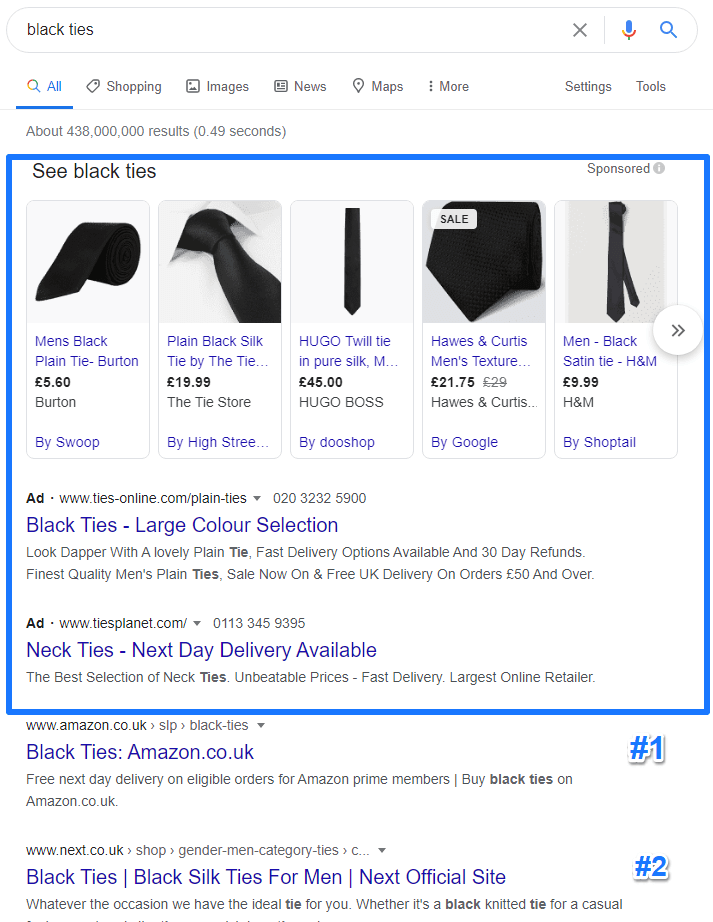
Notice that in this query, the majority of the SERP does not feature organic results.
Only the first two organic results show above the fold.
If you’re ranking #3 for “black ties”, you might think that you’re doing well for ranking a very competitive keyword, but in reality, users will need to scroll down to find your website.
These SERP features don’t only affect desktop queries.
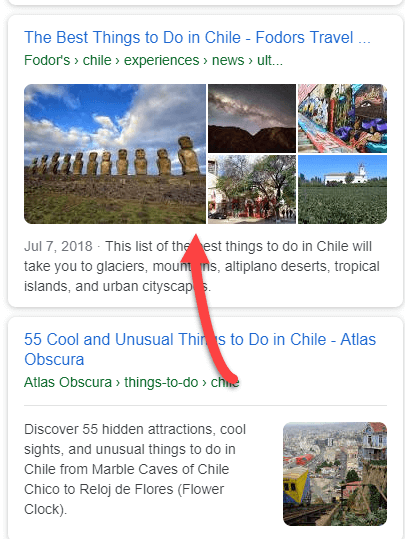
Last year, Mordy tweeted about seeing image collages appearing for mobile queries, and this SERP feature stretches out individual results massively.
We can also see the prominent rise of SERP features such as image thumbnails in the last couple of years.
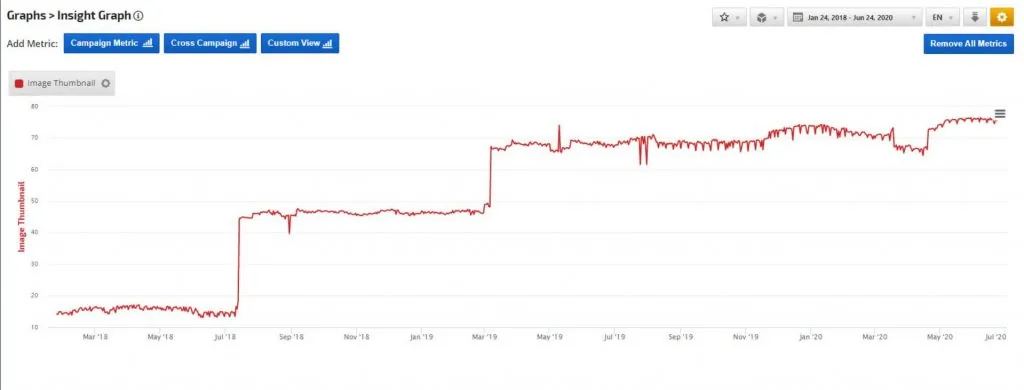
These changes make it very important for SEOs to consider how potent their rankings actually are in terms of actually being seen.
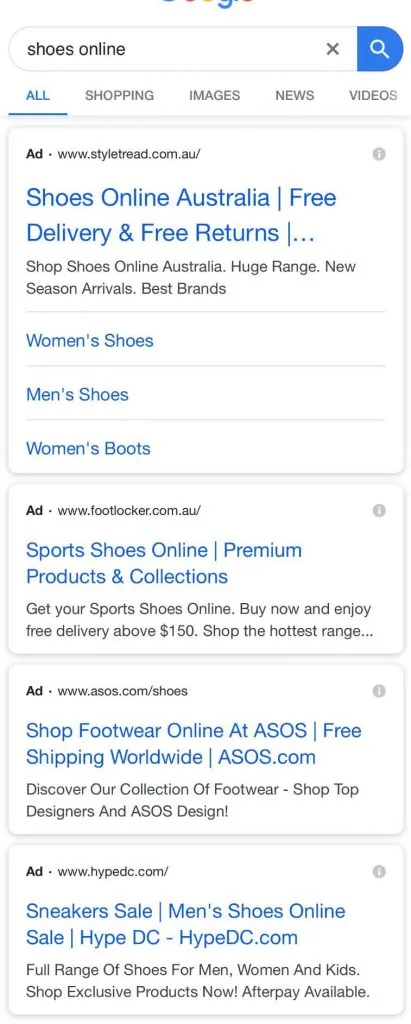
Google are also continuously testing new SERP layouts, such as when Brodie tweeted about seeing the first results (from both organic and paid) to have larger font sizes.
You might be wondering, “how do I know if my organic rankings are affected?”
SEO rank tracking
The good news is that there is a new metric called ‘Absolute Visibility’ that shows the potency of your organic rankings, based on the SERP features that appear below your URL.
Why is this important?
Imagine you have a boring URL that is followed by a video carousel.
From a pixel point of view, you beat the carousel because you’re shown above it.
However, you will most likely lose a lot of clicks in reality, as the carousel would be more appealing.
The metric also weighs up the type of SERP feature, because sitelinks are not the same for stealing clicks as a video box, for instance.
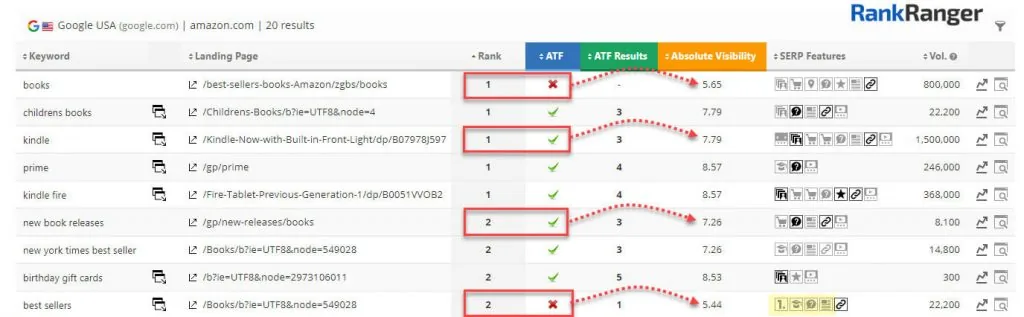
Notice how some position 1 rankings are not even above the fold, and this is an extremely heartbreaking thing to see as an SEO.
The million dollar question is, what can we do about this?
As a London SEO consultant, I think that the most important thing to take into consideration is how valuable SERP features are becoming, as well as acknowledging that in some cases, ranking #1 won’t matter if people don’t scroll down and actually see your website.
AI Overviews: the fold problem gets worse
When I wrote this post in 2020, the threat to above-the-fold visibility was ads and SERP features like shopping carousels, image packs, and People Also Ask boxes.
Today, there’s a new and more significant barrier: Google’s AI Overviews.
AI Overviews now appear at the very top of the SERP for a large proportion of informational queries - before ads, before featured snippets, and before any organic results. On mobile, a full AI Overview can take up the entire screen before a user even sees an organic listing.
The implication is stark: you can rank in position 1 and appear below the fold because an AI Overview is sitting above you.
What can you do about it?
Aim to be cited in the AI Overview, not just ranked beneath it
The content that gets cited in AI Overviews tends to be specific, authoritative, and directly answers the question. If your content is doing that, you have a chance of appearing inside the overview itself - which delivers visibility even if a user never clicks to your site.
Monitor your AI Overview appearances
Tools like Semrush and SE Ranking now track AI Overview appearances alongside traditional rank tracking. Use them.
Check your GSC CTR against your rankings
If you’re ranking well but your CTR is dropping, AI Overviews are likely the reason. This tells you which pages are most affected and should be prioritised for AI-optimised content updates.
The above-the-fold problem hasn’t gone away. It’s just evolved. The principle this post introduced - that visibility matters more than position - is now more important than it has ever been.