Brand Management: The Ultimate Guide
 Itamar Blauer9 min read
Editor’s note (updated July 2026): I first published this guide in May 2020, and reading it back, it sounded more like a marketing lecture than something I’d actually say to a client. I’ve rewritten it to focus on what brand management means for the work I do every day: organic growth and search visibility.
Quick! Take three seconds to think of a brand.
Apple? Google? Amazon?
Thought so.
For most of my career, branding was treated as someone else’s department. SEOs did keywords and links. Brand people did logos and taglines, and the two rarely spoke.
That separation has collapsed. Google’s core updates keep rewarding businesses that people search for by name, and AI assistants recommend brands they already “know” from their training data and the sources they cite. I’ve watched sites with strong branded demand shrug off algorithm updates that flattened their generic-traffic competitors. Brand management has quietly become part of the SEO job description.
So here’s my working guide to it: the theory that’s actually worth keeping, and how it connects to search.
What a brand actually is

A brand is a product with an identity. The logo is the least of it.
Nike and Adidas both sell trainers, yet nobody confuses them. Nike’s identity is built around performance and its athletes. Adidas leans into street-wear and its Hip Hop heritage. Same category, completely different meaning. That difference is why neither has to compete purely on price.
A useful way to think about where your identity comes from is the benefits your brand offers:
- Functional - superior product or service
- Emotional - a genuine connection with customers
- Self-expressive - people consume you to say something about themselves
- Moral - a stance on social or environmental issues
- Experiential - unique experiences nobody else provides
Lush is a good example of picking a lane: strong products plus visible ethical commitments, and they’ve differentiated on that combination for years. You don’t need all five benefits, but you should know which one or two are genuinely yours, because they’ll shape your positioning later on.
Why an SEO is telling you to care about branding
Three reasons, all from watching this play out on real sites.
Branded search demand is a ranking asset. When thousands of people search your name every month, click your result, and don’t bounce back to Google, that’s a satisfaction signal at scale. In my experience, sites with healthy branded demand recover faster from core updates. Often they’re the ones that never needed to recover at all.
Google increasingly ranks entities, doesn’t just match keywords. A recognised brand with consistent information across the web is an entity Google can trust. That trust bleeds into E-E-A-T assessments: who wrote this, are they known, does anyone else vouch for them? You can’t fix those with keywords or links. The answers live in your coverage, your reviews, and whether recognisable people put their names to your content.
AI search recommends brands it knows. Ask ChatGPT or Perplexity to suggest a product in your category and it’ll name brands that appear consistently across reviews, comparisons, forums, and press. If your brand barely exists outside your own website, you won’t be in that answer. I’ve written more about this in my guide to optimising for Google’s AI Overviews, and it’s the core of generative engine optimisation as a discipline.
With that lens on, the classic brand equity framework suddenly becomes very practical.
The five pillars of brand equity

David Aaker defined brand equity as the set of assets (and liabilities) attached to a brand that add or subtract value. He broke it into five categories, and I still find all five useful, as long as you translate them into things you can observe.
1. Brand awareness
Awareness is how present your brand is in someone’s mind, and it comes in flavours: recognition (you see the swoosh and know it’s Nike), recall (you run out of toothpaste and Colgate comes to mind unprompted), and top of mind (the first name that surfaces when someone thinks of your category).
Recall is the one I care about most, because it’s the one you can measure for free. Branded search volume is basically a recall survey that you didn’t have to pay for. Open Search Console, filter for queries containing your brand name, and look at the trend year-on-year. Flat or declining branded impressions while you’re pumping out content is a warning sign no keyword tool will flag for you.
2. Brand loyalty
The Pareto principle applies: a small share of loyal customers tends to drive a disproportionate share of profit. But there are two kinds of loyalty, and they behave differently.
Behavioural loyalty is repeat purchasing. Attitudinal loyalty is genuine affection, and it’s the one that produces recommendations, reviews, and word-of-mouth. You can have one without the other: plenty of people fill up at the same petrol station every week without feeling anything for the brand.
Attitudinal loyalty is the one search engines and LLMs can actually see. It shows up as Reddit threads recommending you, unprompted mentions in forums, positive reviews on third-party sites. That’s the raw material AI search draws on when it decides which brands to suggest.
3. Perceived quality
Perceived quality is what justifies a price premium. Ask someone to name a premium brand and you’ll hear Porsche, Gucci, Apple - brands whose reputation for quality is so established that people who’ve never bought them still believe it.
The part worth remembering: quality is determined by your customers and their social circles, not by your own claims. In search terms, that means your review profile and what people say about you in communities matter more than the adjectives on your homepage.
4. Brand associations

For my money, this is the most important pillar. Associations are everything your brand is mentally linked to: functional attributes, symbols, people, moments.
Aston Martin is associated with speed and performance, but also with James Bond. That second association wasn’t built through product specs.
The thing is, you don’t fully control your associations. Ever wondered why Adidas is associated with Hip Hop and street-wear?
It wasn’t because of Adidas.
Run DMC loved Adidas, and their fans followed. The brand had the sense to embrace it.
Most of us won’t get a Run DMC moment, but the mechanism is replicable: associations are built through the company your brand keeps. This is exactly where digital PR earns its money. Every credible publication that mentions you alongside your topic strengthens the association between your brand and that subject. It works on journalists, it works on Google’s entity understanding, and it works on the LLMs trained on all of that coverage. I’ve gone deeper on this in my post on how digital PR and SEO work together.
5. Proprietary brand assets
Trademarks, patents, and the like. Less glamorous, still worth having. A trademark protects you from lookalikes, and in search terms it gives you standing to defend your brand SERP when affiliates, resellers, or competitors start camping on your name.
Brand positioning
Positioning is where you sit in the market relative to competitors: which segment you serve, at what price point, with what benefits. It gets confused with brand image, but they’re different jobs. Positioning is a strategic choice you make, identity is how you express it, and communication is how you get both across.
Repositioning means changing that market position: new attributes, new audience, or both. If you ever do it, remember that search engines have a long memory. Your old positioning lives on in years of coverage, anchor text, and reviews, and part of a repositioning budget should go towards updating that footprint, which almost nobody plans for.
Communicating your brand
Once you know your position and identity, you have to communicate them. The only rule that matters is authenticity.
Social media handed customers most of the power years ago, and audiences have become ruthless at spotting brands that fake it. Greenwashing gets named and shamed within hours, and audiences will happily ratio a brand whose enthusiasm is obviously manufactured. If your communication doesn’t match what your brand actually does, expect people to point it out publicly, and loudly.
A related pet peeve of mine: brands jumping on trending hashtags that have nothing to do with their business. I’ve called this the “hashtag brandwagon” for years. Relevance beats reach. A small audience that actually believes you is worth more than a big one that scrolled straight past.
If I could only pick one channel to lead with, it would be PR rather than advertising. Ads work much harder once people have already heard someone vouch for you, and earned coverage is what builds that trust in the first place. It carries over into every other channel too, including your organic rankings.
Auditing your brand
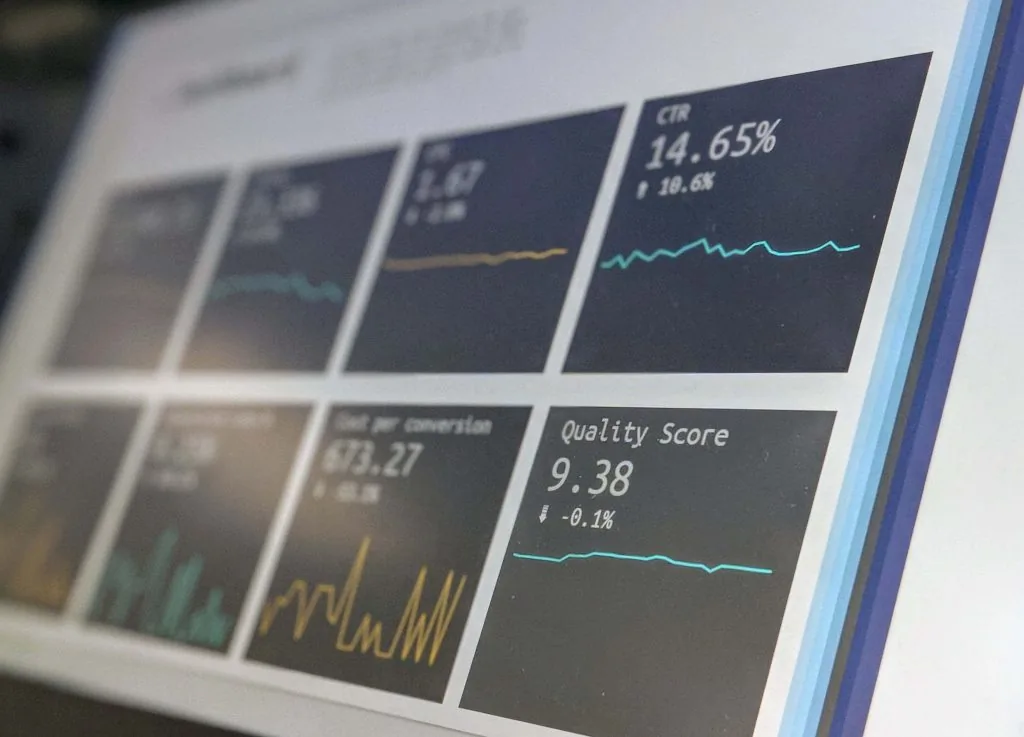
A brand audit checks whether the position you think you hold is the one people actually perceive. I’d do this at least twice a year. Here’s my current checklist:
- Branded search trend. Search Console, queries containing your brand, year-on-year. This is your recall metric.
- Your brand SERP. Google your own name in an incognito window. Everything on page one is your shop window - reviews, third-party articles, social profiles. Fix what’s stale, respond to what’s negative.
- Ask the AI assistants. Prompt ChatGPT, Perplexity, and Gemini with “what do you know about [your brand]?” and with the category questions your customers actually ask. What they say (and whether you appear at all) tells you how your brand looks to the fastest-growing discovery layer on the web.
- Community listening. Reddit, niche forums, industry Slack and Discord groups. This is where unfiltered brand perception lives, and it’s increasingly what AI answers are trained on.
- Review velocity and sentiment. Fresh reviews on the platforms your customers trust, and how you respond to the bad ones.
Old-school methods like focus groups and recall surveys still work if you have the budget, but the list above is free and closer to how discovery actually happens now.
Where this leaves you
Branding used to be the fluffy half of marketing while SEO was the measurable half. These days I’d argue the strongest technical site with weak brand signals loses to a mediocre site people actively search for. Every piece of coverage, every review, every community mention is compounding into how both Google and AI assistants understand who you are. In my experience the rankings tend to follow from that, far more often than the reverse.
If you’re wondering where to start, run the brand audit above. Most of it is free, half of it takes an afternoon, and it’ll show you exactly where the gaps are.
And if you want help joining brand and organic strategy together, this is a big part of my work as an SEO consultant in London. Get in touch and tell me where you’re stuck.